Modelling the future with multiphysics research

A powerful ocean wave crashes against large blocks of ice under an overcast sky

MASI is Western Canada’s centre of excellence in marine, aerospace, subsea and naval systems, anchored at the University of British Columbia. MASI is establishing Canada’s first Pacific–Arctic hub for world‑leading research, innovation and training that supports national sovereignty, security and sustainable blue‑economy growth.

Multiphysics modelling is essential for understanding how complex physical systems behave in real-world environments before they are built or deployed. These tools help identify where designs can be improved and how to make emerging technologies safer, cleaner and more efficient.

This need is especially evident in areas like renewable energy and aviation, where turbulent atmospheric flows and harsh operating conditions create challenges that are difficult to study experimentally. 

High-fidelity simulations allow researchers to explore these dynamics in detail, revealing insights that guide the design of more efficient wind farms and the development of next-generation, low-emission aircraft.

Dr. Joshua Brinkerhoff, Associate Professor at UBC Okanagan and lead of the Okanagan Computational Fluid Dynamics Laboratory, is one of the researchers advancing this work. His team develops large-scale simulations and multiphysics models that deepen our understanding of turbulent flow behaviour and support MASI’s broader efforts to build cleaner, more resilient transportation technologies across marine, aviation and subsea domains.

Okanagan Computational Fluid Dynamics Laboratory

Tell us about the Digital Twin and Multiphysics group within MASI

Digital twin and multiphysics technologies are reshaping how complex systems are designed, operated and maintained – especially in sectors where safety, efficiency and environmental sustainability are paramount. Within MASI, researchers in the Digital Twin and Multiphysics group focus on creating high‑fidelity virtual replicas of vessels, aircraft and other kinds of offshore systems that can simulate real-world physics in real time. These models help predict failures before they occur, optimize performance under extreme conditions and support intelligent, data-driven decision-making across an asset’s entire life cycle.

The challenge is that these systems operate in environments defined by turbulent, multiscale physical processes. 

Capturing these processes accurately requires advanced computational methods, physics-based machine learning and massive simulations that can span from centimetre-scale turbulence to weather systems tens of kilometres across. MASI’s Digital Twin and Multiphysics group is building the computational foundations that support the next generation of marine, aviation and subsea technologies.

Where does your research fit into all this?

My work encompasses two broad themes: wind energy systems and hydrogen energy systems.

In my work on wind energy systems, I develop high-fidelity models of how wind farms interact with the turbulent flow in the Earth’s atmosphere to understand the mechanisms that lead to inefficiencies and losses. These are large-scale simulations: in 2023, for example, my team performed the year’s single largest computation conducted in Canada in an academic setting.

These models are so big because they have to resolve large-scale weather patterns that are tens of kilometres in size while also simulating the turbulent flow structures that are on the order of centimeters in size. These numerical simulations capture all of the relevant aerodynamic processes.

The models are currently being used to design more efficient wind farms that take into account expected loss mechanisms. UL Renewables, a US consultancy, is using these models to support its clients across four continents to understand the losses present in existing farms and help design new ones. 

UL Renewables

Tell us about your research on hydrogen-powered aviation

The second area of my research that connects to MASI is multiphysics modelling work on decarbonizing the aviation sector. 

This involves developing models to understand how hydrogen fuel cells will behave in aircraft, as well as devising new techniques for creating or miniaturizing these hydrogen fuel cells.

In the transportation sector, hydrogen is currently used as a fuel in cars, buses and trucks. But the low power-to-size ratio of hydrogen fuel cells mean they are not yet suitable for aircraft. I am developing models to understand how to improve cells to enhance power density and integrate them safely within an operating environment characterized by broad ranges in temperature and humidity as well as high levels of vibration. These models help us understand the materials, heat transfer, and fluid flow processes involved in that.

This work is being done in collaboration with Unilia, a BC company that builds hydrogen fuel cell solutions for trucks and is interested in expanding into the aviation market. 

Unilia

Aviation is a major polluter – if the sector was a country, it would have the sixth-highest emissions of any nation in the world – and it is very difficult to decarbonize.

We’re working on an aviation-specific fuel cell designed to power small aircraft carrying nine to 19 passengers on routes under 500 miles. While it’s feasible to achieve this in the next five years or sooner, scaling the technology to larger commercial level will require significant technology advancements to make the fuel cells more power dense, robust and reliable. 

Why did you want to get involved with MASI?

MASI enables UBC researchers from both campuses to join forces and benefit from synergies, shared expertise and a broader researcher base. In my case, whether I am working on wind farms or hydrogen-powered planes, the core challenge is making sense of turbulent flows. As my own work shows, these models apply far beyond one application or sector. Within MASI, there is commonality across the domains of marine, aviation and subsea, so progress in one area can accelerate progress in the others – ultimately leading to solutions with a wider impact. 

Image
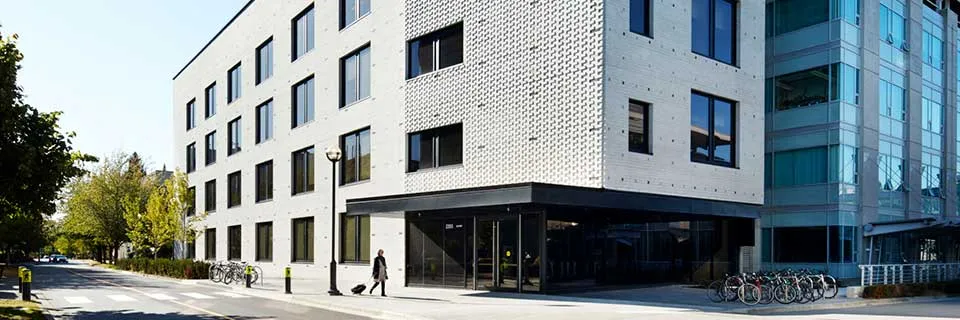
View outside Stewart Blusson Quantum Matter Institute

Research Centres and Institutes

Our multidisciplinary expertise is creating innovations that make the world a better place. Partner with us and gain access to our world-class infrastructure and expertise.

View Centres and Institutes

Image
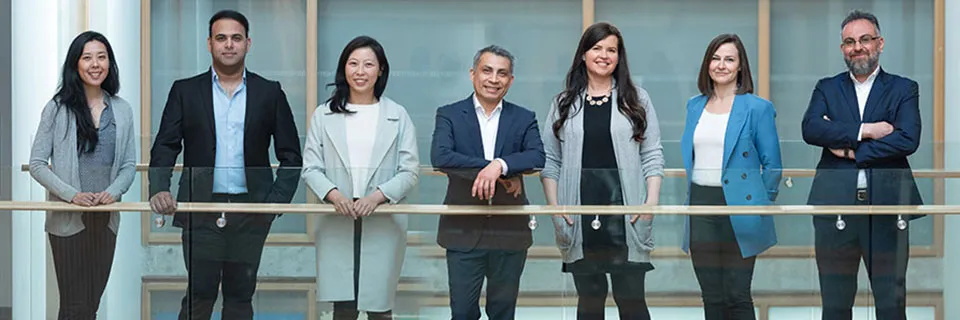
APSC Research team group photo.

Research and Partnerships Team

Our dedicated team actively seeks collaboration opportunities with industry, non-profit and government partners to accelerate solutions for the future.

Meet the Team


Let's Work Together

Join us. Bring research and innovation insight to your biggest challenges. We work with industry, non-profit and government partners to accelerate solutions for the future.

Partner with Us

Research News

Let's work together

Join us. Bring research and innovation insight to your biggest challenges. We work with industry, non-profit and government partners to accelerate solutions for the future.

UBC is located on the traditional, ancestral and unceded territories of the xʷməθkʷəy̓əm people (Musqueam; which means 'People of the River Grass') and Syilx Okanagan Nation. The land has always been a place of learning for the Musqueam and Syilx peoples, who for millennia have passed on their culture, history and traditions from one generation to the next.

UBC Crest The official logo of the University of British Columbia. Arrow An arrow indicating direction. Arrow in Circle An arrow indicating direction. Caret An arrowhead indicating direction. E-commerce Cart A shopping cart. Time A clock. Chats Two speech clouds. Facebook The logo for the Facebook social media service. Social Media The globe is the default icon for a social media platform. TikTok The logo for the TikTok social media platform. Calendar Location Home A house in silhouette. Information The letter 'i' in a circle. Instagram The logo for the Instagram social media service. Linkedin The logo for the LinkedIn social media service. Location Pin A map location pin. Mail An envelope. Telephone An antique telephone. Play A media play button. Search A magnifying glass. Arrow indicating share action A directional arrow. Speech Bubble A speech bubble. Star An outline of a star. Twitter The logo for the Twitter social media service. Urgent Message An exclamation mark in a speech bubble. User A silhouette of a person. Vimeo The logo for the Vimeo video sharing service. Youtube The logo for the YouTube video sharing service. Future of work A logo for the Future of Work category. Inclusive leadership A logo for the Inclusive leadership category. Planetary health A logo for the Planetary health category. Solutions for people A logo for the Solutions for people category. Thriving cities A logo for the Thriving cities category. University for future A logo for the University for future category.