Engineering resilience: Building secure, integrated systems

A ship sailing through a dense field of floating ice floes in the Arctic

MASI is Western Canada’s centre of excellence in marine, aerospace, subsea and naval systems, anchored at the University of British Columbia. MASI is establishing Canada’s first Pacific–Arctic hub for world‑leading research, innovation and training that supports national sovereignty, security and sustainable blue‑economy growth.

Autonomous drones supporting search-and-rescue, marine vessels navigating contested waters or remote sensing platforms monitoring climate change must all function reliably even when confronted with extreme weather, hardware failures, cyberattacks or deliberate interference from adversaries. As Canada expands its presence in the Arctic and in light of uncertain geopolitics, the need for secure, dependable, end-to-end system resilience has never been more urgent.

MASI’s Systems Engineering and Communications pillar brings together experts in computation, communication and sensing to rethink how entire systems are designed, integrated and tested. The goal is to build systems that can continue their mission even when key components fail or come under attack, and to do so in environments far more extreme than any laboratory can replicate.

Dr. Karthik Pattabiraman, a Professor of Electrical and Computer Engineering and head of Dependable Systems Lab @UBC, is one of the researchers leading this effort. We talked with him about how his work is advancing new and innovative ways to ensure technology is robust and resilient under a range of conditions.

Dependable Systems Lab @UBC

Tell us about the work being done by MASI’s Systems Engineering and Communications group

MASI is building innovation across the marine, aerospace and subsea areas. 

One of the centre’s six pillars deals with computation, communication and sensors  – the “brains and sensory organs” – of engineered and autonomous systems. 

The challenge this group is addressing is making sure that the system as a whole remains resilient to natural failures and adversarial manipulation.

This involves looking at three aspects. Computation is the brain, integrating information from different sensors – such as thermal, LiDAR and cameras – and formulating a plan of action. Computation is vulnerable to software bugs, hardware faults and cyberattacks.

Communication is the link between the systems and the outside world. 

It has to receive instructions and send information back, all while preventing adversaries from altering data and while ensuring that links are both secure and highly available.

Sensors are the eyes and ears. These are threatened by environmental factors or adversaries, such as GPS spoofing and jamming. We need to make sure that equipment is able to detect misleading signals or continue the mission even when the expected sensor data is not available. 

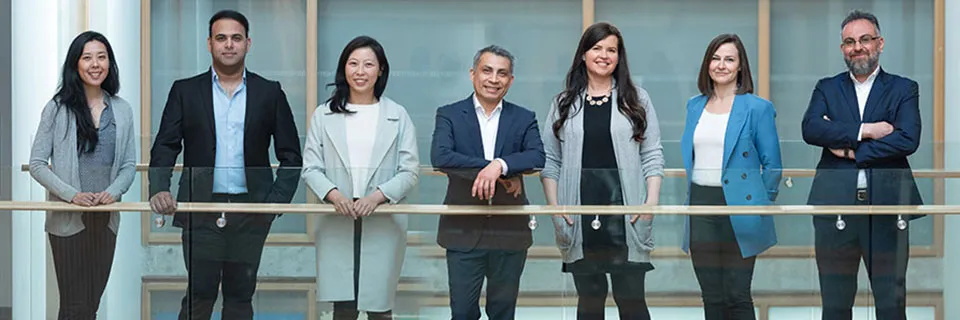
MASI's Systems Engineering and Communications Group

How does your research fit into this?

My research focuses on building resilience in cyber-physical systems so they can keep functioning even when something fails, whether that’s a natural failure or one caused by a malicious attacker. I work across the full system stack, from hardware up through the operating system, middleware and applications, to understand how to make them robust. While some of my colleagues like Dr. Vincent Wong focus on communications resilience, my work centres on computation and sensor resilience, especially from the software side.

A lot of my examples come from drones operating in hostile or unpredictable environments. 

One challenge I look at is what happens if a drone loses a key sensor like GPS – maybe it’s jammed or the signal drops. 

Can the drone reconstruct enough of its state from other sensors to stay stable and carry out its mission? Another area involves mission planning. If certain waypoints are inaccessible due to bad weather or an adversary, can the drone dynamically reconfigure the mission and chart a different course so it can still achieve most of its objectives, all while running on limited memory and compute resources?

What current limitations does your research address?

While we already have tools to provide resilience against natural failures, my work shows that many of these approaches do not work when facing intelligent adversaries. In fact, many traditional fault-tolerance techniques can make things worse in adversarial settings. My work addresses this gap to build in system resilience so that the mission can continue and achieve all or most of its objectives despite the presence of attacks and errors.

There’s also a gap between what works in cloud or server environments and what works on resource-constrained platforms like drones. In the cloud, if something fails, you have a fallback. For example, a cloud can spin up another virtual machine to take over from the failure. A drone only has the hardware and software it carries with it, and perhaps those of its neighbouring drones. You have to use those limited resources in the most optimal way possible. 

Why did you want to get involved with MASI?

I wanted to be part of MASI because there’s a real opportunity to make a difference. It aligns with the federal government’s priorities to invest in securing our defences and making sure we are ready to face the challenges that lie ahead. MASI provides a unique opportunity to bring silos together in realistic system demonstrations. 

I am fortunate to be working with other faculty members in MASI, surrounded by experts in different areas and to collaborate with industry partners to bring these solutions to life.

For example, while I am focusing on the software side of systems engineering, many of my MASI colleagues are exploring the hardware side, such as making sensors less susceptible to attacks or building in hardware-level redundancy. When you integrate computation, communication and sensor-actuator systems, there are many more points of failure and susceptibility to attacks. Securing each subsystem is one thing; securing the integrated whole is much more complex. Being part of MASI enables those connections to happen.

The same techniques also apply to civilian missions, such as drones delivering critical medical supplies after a disaster or remote platforms monitoring extreme weather events. These systems face similar resilience challenges; the underlying techniques don’t change, only the mission context does.

We’re also working within the context of the broader UBC community. Vancouver is one of the most important ports on the west coast and we can partner with organizations that are already leaders in this area. We have a strong presence in northern British Columbia and the Okanagan. 

UBC has expertise across all layers of the stack, which allows us to take a more integrated, holistic systems perspective. 

The goal is to ensure that autonomous systems deployed in Canada's most remote and demanding environments such as the Arctic can be trusted to complete their missions — no matter what goes wrong or who's trying to stop them.

Image
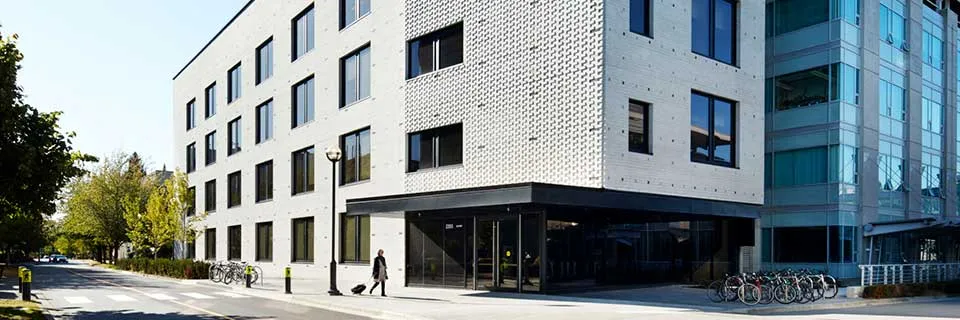
View outside Stewart Blusson Quantum Matter Institute

Research Centres and Institutes

Our multidisciplinary expertise is creating innovations that make the world a better place. Partner with us and gain access to our world-class infrastructure and expertise.

View Centres and Institutes

Image
APSC Research team group photo.

Research and Partnerships Team

Our dedicated team actively seeks collaboration opportunities with industry, non-profit and government partners to accelerate solutions for the future.

Meet the Team


Let's Work Together

Join us. Bring research and innovation insight to your biggest challenges. We work with industry, non-profit and government partners to accelerate solutions for the future.

Partner with Us

Let's work together

Join us. Bring research and innovation insight to your biggest challenges. We work with industry, non-profit and government partners to accelerate solutions for the future.

UBC is located on the traditional, ancestral and unceded territories of the xʷməθkʷəy̓əm people (Musqueam; which means 'People of the River Grass') and Syilx Okanagan Nation. The land has always been a place of learning for the Musqueam and Syilx peoples, who for millennia have passed on their culture, history and traditions from one generation to the next.

UBC Crest The official logo of the University of British Columbia. Arrow An arrow indicating direction. Arrow in Circle An arrow indicating direction. Caret An arrowhead indicating direction. E-commerce Cart A shopping cart. Time A clock. Chats Two speech clouds. Facebook The logo for the Facebook social media service. Social Media The globe is the default icon for a social media platform. TikTok The logo for the TikTok social media platform. Calendar Location Home A house in silhouette. Information The letter 'i' in a circle. Instagram The logo for the Instagram social media service. Linkedin The logo for the LinkedIn social media service. Location Pin A map location pin. Mail An envelope. Telephone An antique telephone. Play A media play button. Search A magnifying glass. Arrow indicating share action A directional arrow. Speech Bubble A speech bubble. Star An outline of a star. Twitter The logo for the Twitter social media service. Urgent Message An exclamation mark in a speech bubble. User A silhouette of a person. Vimeo The logo for the Vimeo video sharing service. Youtube The logo for the YouTube video sharing service. Future of work A logo for the Future of Work category. Inclusive leadership A logo for the Inclusive leadership category. Planetary health A logo for the Planetary health category. Solutions for people A logo for the Solutions for people category. Thriving cities A logo for the Thriving cities category. University for future A logo for the University for future category.