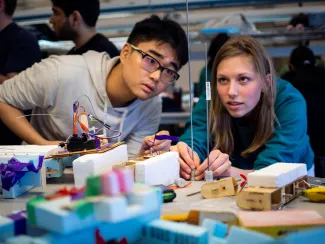
"The best motivator is knowing that my work has a positive impact on others - finding ways to make that human connection with my research has been so important."
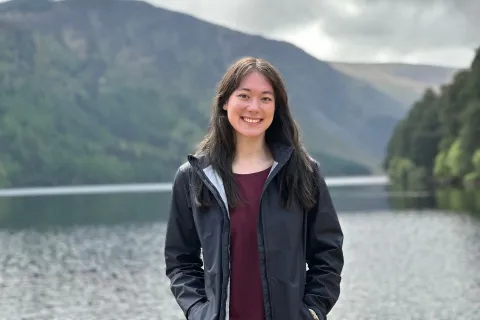
Jessica Wolf
- Degree:
- Master of Applied Science
- Grad year: 2024
- Program:
- Campus: Vancouver
My name is Jessica Wolf. I’m a first year PhD student and recent MASc graduate in Mechanical Engineering, and I do engineering education research. I have a passion for social justice and community and I pursue meaningful change in these areas through my research and my roles in the TA union on campus, CUPE 2278, and our departmental graduate student club, Mechanical Engineering Graduate Association (MEGA).
When I graduated with my bachelor’s degree from Harvey Mudd College, I was still quite unsure of what I wanted to do with my life and career, and that uncertainty continued into my time at UBC. As I got more involved with the grad student community, however, I realized that the times I felt the most driven and inspired were those in which I was fighting for change, both for and alongside my peers.
At the same time in my academic journey, I pivoted into engineering education in my search for a clear human-facing research impact.
My master’s thesis explored how equity, diversity, inclusion and Indigeneity content is taught and assessed in engineering courses, and the barriers and supports that engineering faculty experience in implementing such content. My PhD research focuses on the impacts of STEM outreach on students from underrepresented groups in engineering, a topic that is especially important to me given my personal experiences as a racialized woman in STEM.
Mechanical Engineering Graduate Association (MEGA)

Have you acquired any particularly useful skills?
One of the most useful skills I’ve learned through my graduate studies at UBC is that of interdisciplinary work.
My research in engineering education is inherently interdisciplinary—throughout my time here I have collaborated with students and faculty across all of the engineering departments, as well as sociology, psychology and education.
I’ve had the opportunity to take graduate courses in not only mechanical engineering, but also civil engineering, education, sociology, and gender, race, sexuality and social justice (GRSJ). These learning experiences have helped me contextualize my research on equity, diversity and inclusion in engineering, within the broader context of systems of oppression that are present in society and in the engineering field. I’ve also gained valuable skills in communicating about these topics with engineers (both faculty and students), who are and will be instrumental in enacting meaningful change in engineering education.

What advice would you give a student entering your degree program?
I started my degree program knowing virtually nothing about grad school—just how different it is from undergrad, how important your supervisor relationship can be and the nature of grad school imposter syndrome. The best decision I made during my program was changing my research area, project and supervisor, to focus on equity in engineering education with Dr. Agnes d’Entremont. I would encourage any engineering student entering grad school to do so with an open mind and heart to the different possibilities and paths that they can take.

For most of my education, I was following a very specific and expected path towards a STEM degree, and then towards a high-paying and secure engineering job, and so on. Grad school can certainly be part of that path if that’s what you want, but it’s also an incredible opportunity to explore different research directions, make connections with people in different fields, and ask (and answer) questions that you might not have the opportunity to do so elsewhere.
How would you describe the student community?
I think, in general, grad school as a MASc or PhD student in engineering can be a bit isolating. Many people spend the majority of their time in their lab or office, and thus have much less opportunity to form community with their peers. Luckily I got involved with MEGA soon after I started my program, which was the starting point for many of my connections. Through MEGA I found like-minded peers who cared about advocating for grad students’ needs, and during my time as MEGA president I was able to help usher in more student participation in the club after a lull during the virtual years of the pandemic.
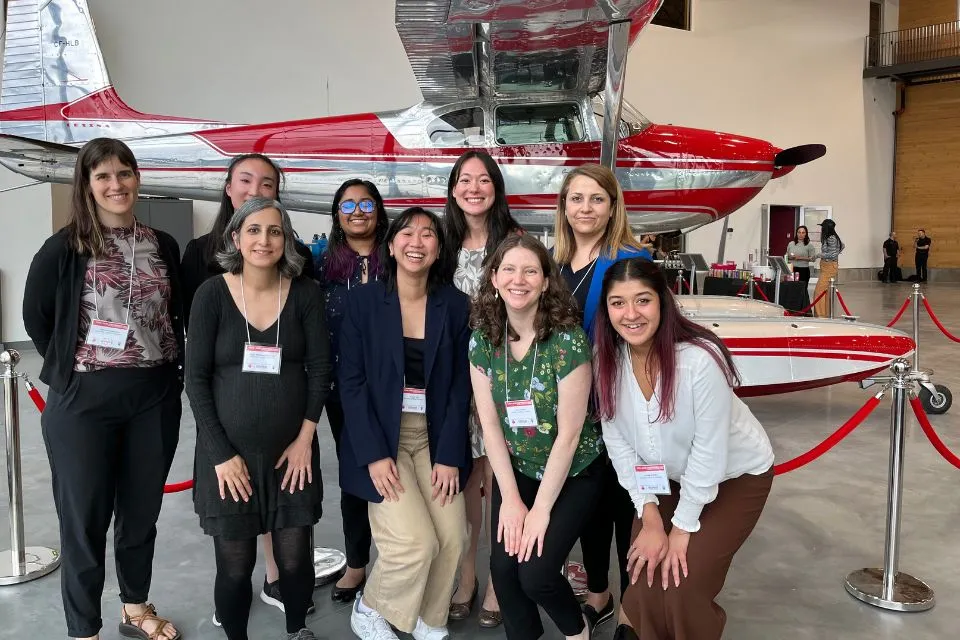
Through my research as well, I’ve had the pleasure of meeting so many other students doing important equity work in engineering education, such as Debalina Saha (previous Rising Star) and Jess Tran.
How did your studies in the Faculty of Applied Science prepare you for the future of work?
Research at the intersection of engineering education and EDI is relatively new and constantly changing as our world and social context changes. Throughout my studies in the Faculty of Applied Science, I’ve been fortunate to be able to work closely with an amazing group of researchers who care about advancing equity in engineering, and have had the opportunity to contribute to EDI.I initiatives in my department and the Faculty with the support of people like Dr. Sheryl Staub-French and Jennifer Pelletier.
These communities and connections have been an invaluable part of my research and learning experience at UBC, and have helped me foster the collaborative and justice-oriented skills I will need to continue this work in the future.
"In the male-dominated field of mechanical engineering, I’ve had the unique experience of working with a research group that is primarily women (including Dr. Agnes d’Entremont, Dr. Karen Cheung, Dr. Jenna Usprech, Dr. Robyn Newell, Dr. Negar Harandi and Dr. Katherine Lyon), as well as with many inspiring women engineers and scientists beyond my research group (such as Dr. Sheryl Staub-French and Dr. Jaclyn Stewart). As a mixed woman of colour, I know a little bit of the struggle of finding role models in engineering who share my identities. Being surrounded by such a supportive and diverse group of women in my graduate studies has been a breath of fresh air, to say the least. At the same time, knowing how rare my experience is, and how predominantly white engineering still is, I am constantly reminded of the importance of my work and motivated to continue pressing on."