“Change is the only constant state in life” - I love this quote from Heraclitus and I try my best to embrace the ups and downs as part of my learning journey through life.
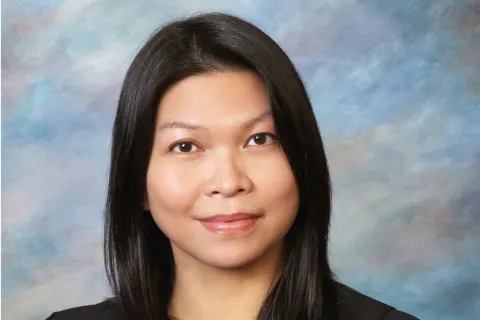
Grace Sonmezsoy
- Degree:
- Master of Engineering Leadership
- Grad year: 2022
- Program:
I was born and raised in Hong Kong, studied high school and university in the UK, and had previously worked in the UK and Hong Kong. With a degree in civil and environmental engineering, an MSc in Transport, and an MBA, I have been working as a consultant in the infrastructure sector for 20 years, providing strategic advice to investors, lenders, developers and governments for more than 30 countries worldwide. Given the rapidly changing landscape and the increasingly complex challenges we are facing in the infrastructure sector, I decided to pursue the MEL in Urban Systems at UBC to update my skills so I can better address the complex challenges facing our cities.
What has made your time at UBC memorable?
The people!
I am very fortunate and truly grateful for all the people that I met during my time at UBC. Given the multidisciplinary nature of urban systems, our class was made up of people from a variety of professional backgrounds, including architects, engineers, planners, accountants, energy specialists, electric vehicles experts, etc. This mix of people brought a unique dynamic to our learning experience – we had unique perspectives to share, we supported and learned from each other, and we had fun together! Our highly-regarded professors are knowledgeable and passionate about teaching and sharing their knowledge. Additionally, many industry leaders came to speak with us over the year, which was very beneficial for learning about how organizations are addressing the latest issues and trends.
How do you feel your degree has benefitted you compared to a different field of study?
The MEL in Urban Systems is a unique hybrid program combining graduate-level engineering and urban planning courses with business modules. Its technical curriculum covers the life cycle of urban infrastructure, including planning, engineering, infrastructure asset management, and project delivery and economics. The integrated nature of these modules gives us a broad perspective of the challenges of aging infrastructure, complex system design and sustainability.
Unlike my education in civil engineering, which was quite siloed, this program requires you to think about the totality of the system and the holistic approaches needed to successfully address challenges. The business and leadership classes offered by UBC Sauder’s Robert H. Lee Graduate School proved to be very useful and are very important to help us guide our teams and organizations to success.
Many of today’s jobs did not exist 10 years ago, and we do not know for certain what the workforce will look like 10 years from now. How did your studies in the Faculty of Applied Science prepare you for the future of work?
Not only that my studies in the Faculty of Applied Science prepared me for the near future of work in the infrastructure sector, but it has also helped me to change my perspectives and reframe many of the challenges and issues we currently face as opportunities.
Just like my motto “Change is the only constant state in life”, while no one can predict the future, we can do our best and pursue the purpose of our life by continuously learning and keeping a positive mindset in our life.