Mohammad Arjmand
- Website Department profile
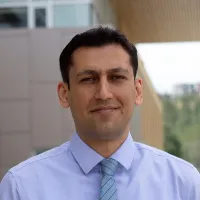
Dr. Arjmand is an assistant professor at the University of British Columbia and the Canada Research Chair in Advanced Materials and Polymer Engineering. Dr. Arjmand obtained his PhD from the University of Calgary, Canada in Chemical (Polymer) Engineering in 2014. After his PhD, he carried out Postdoctoral work at the University of Calgary (2014-2017) and the University of Toronto (2017-2018), and was a Guest Researcher at the Leibniz Institute for Polymer Research in Germany (July-August 2015).
Due to lightweight, low cost, corrosion resistance, facile processability and improved design options compared to metals, ceramics and concrete, polymers have realized a broad spectrum of applications in various industries. When polymer nanocomposites are being mixed with multifunctional nanomaterials, polymers have the potential to be employed in advanced applications requiring enhanced physical properties such as electrical, thermal and mechanical. There is an immense request for customized nanomaterials and polymer nanocomposites that Dr Arjmand develops within his lab. They are being applied across various industries, including electromagnetic shields of sensitive electronics and electrical devices, electrostatic discharge and antistatic materials, polymer-based capacitors, gas sensors, brake pads for transportation sectors, wastewater treatment, biocomposites for food packaging, bio-imaging, heavy metals sensing, and polymer nanocomposites with enhanced mechanical and thermal properties within the aerospace, automotive and military industries!
To be more specific, Dr Arjmand’s team has expertise on the synthesis of various types of nanomaterials, including graphene, graphene quantum dots, carbon nanotube, metal-organic framework, metallic nanowires, and metallic nanoparticles. His research team has also expertise on 3D printing and development of multifunctional 3D printing polymer nanocomposite filaments. Imagine to 3D print a lightweight material with any shape and any property. Dr Arjmand’s research lab is well-quipped with a broad spectrum of nanomaterials synthesis, polymer processing, and materials characterization facilities.