Canada needs 22 million homes fast. UBC and partners are delivering solutions
Canada needs 22 million new homes by 2030. UBC is working with governments, industry and communities to make that goal more achievable—by mapping buildable land, testing faster and greener construction, and designing homes built for climate extremes.
Together, these projects could help unlock land for up to 50,000 new housing units, cut construction costs by as much as 60 per cent, and create jobs while reducing emissions.
Unlocking land for homes
It starts with knowing where to build. UBC’s Housing Assessment Resource Tools (HART) team is creating the BC Public Lands Map, the first province-wide inventory of public land. The interactive tool—set to launch in summer 2026—will help governments and developers spot underused sites that could support new housing.
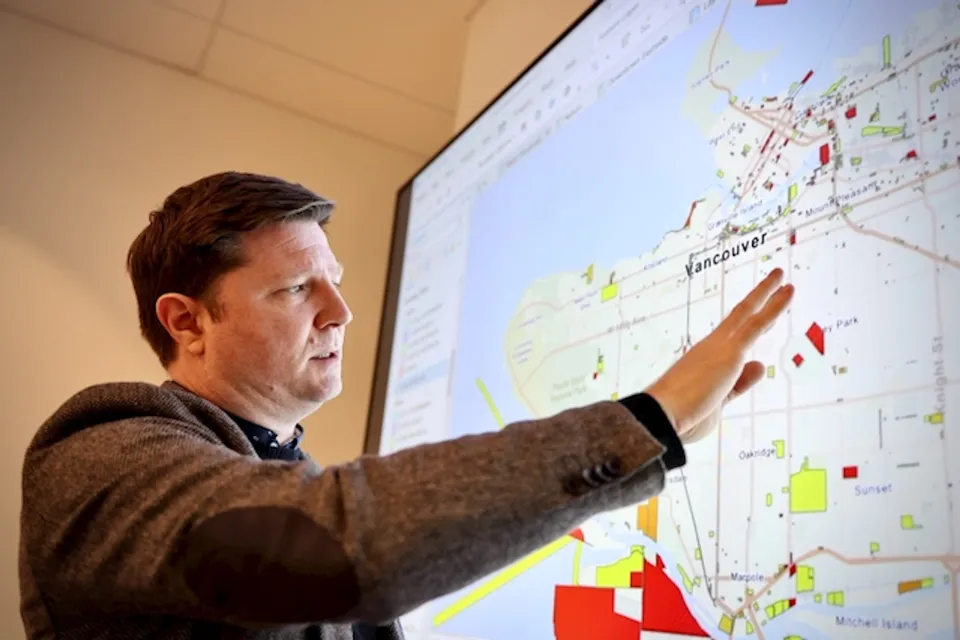
Early analysis suggests potential for up to 50,000 additional housing units on public land across B.C. If widely adopted, the tool could lower delivery costs by up to 60 per cent.
HART’s assessment tools have already saved municipalities an estimated $6 million over the last year. A new Indigenous-led Housing Needs Assessment Tool, co-developed with the Aboriginal Housing Management Association and the First Nations Health Authority, could save smaller communities thousands more while improving local housing data.
“We’re connecting need with opportunity,” says Dr. Craig Jones, HART associate director. “That’s how communities can move faster.”
Testing faster, lower-cost construction
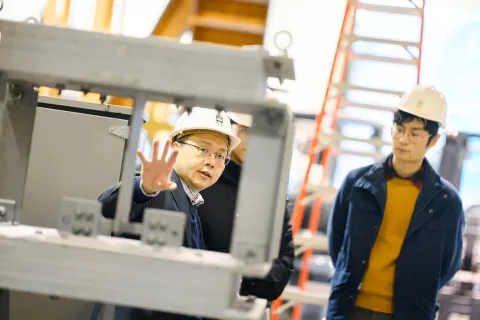
Identifying land is only the first step. At UBC, Dr. Tony Yang and industry partners are leading an $8.3 million national project to make modular construction faster, cheaper and cleaner.
The team is developing factory-built modules made from engineered wood and carbon-neutral materials that can be assembled in days, not months—cutting build times by half and costs by about 30 per cent.
They’re also testing AI design tools and smart sensors to improve efficiency and shrink carbon footprints—predicting material needs, reducing waste and optimizing energy use once homes are occupied.

Now in prototyping, the project will produce a full-scale demonstration building and design guide to help scale low-carbon housing across Canada.
“Modular construction can tackle multiple challenges at once—speed, cost, climate and jobs,” says Dr. Yang.
Designing homes for a changing climate
While modular systems help lower costs in cities, UBC is also working with communities to design durable, climate-resilient housing.
At the school of architecture and landscape architecture, UBC is collaborating with the Yuneŝit’in government to design a wildfire-resilient home that blends Indigenous knowledge with modern engineering.

Co-led by Prof. John Bass and Russell Myers Ross, a Tsilhqot’in Nation member and former Yunesit’in Chief, the project focuses on affordability and community capacity-building.
The home features fire-resistant walls, a reflective roof and a partially sunken, skylit layout inspired by traditional pithouses. Once built, the prototype is expected to create local jobs, develop skills in timber design and fabrication, and keep economic benefits within the community.
“This project was co-designed with a remote community that lives under the threat of wildfire,” says Prof. Bass. “It’s about their resilience and building the local economy.”